
How to Buy a Used Car in Essex: A Step-by-Step Guide
Buying a used car in Essex on a tight budget means taking care to avoid an expensive mistake. The county has plenty of stock to choose from, so a clear method is more useful than rushing to the first car that looks clean.
Set a full budget before you browse
Start with a total budget, not just the price on the windscreen. Insurance can change the maths fast when money is tight. Get a quote for the specific car before you travel rather than assuming a small hatchback will be cheap to insure.
Tax and upkeep matter too. Check the vehicle’s tax rate rather than judging it by size or fuel type alone. An MOT due next month is a bill you’ll need to budget for soon, along with any work needed to pass. Allow a buffer for first-year fixes like tyres and brakes.
Think about how you’ll pay. Paying outright avoids finance repayments. If considering hire purchase or PCP, compare the total amount payable, ownership conditions and any final payment, rather than just the monthly figure. Once you’ve set your budget, stick to it when you browse.
Pick a dealer or a private seller
Decide whether to look at dealer stock, private adverts or both. If you’re comparing cars around Chelmsford, Basildon, Southend-on-Sea or Colchester, shortlist by suitability first, then plan viewings around the distance you’re willing to travel. A nearby car still needs the same checks as one farther away.
Buying from a dealer generally gives you stronger statutory protections than buying privately. The Consumer Rights Act 2015 covers dealer sales. A warranty may be included as well, but cover varies a lot so read the terms and keep it separate from your statutory rights.
Private sales still have basic rules on accurate description and clear title, yet getting a repair or refund is often harder in practice. Many buyers search for used car dealers essex when they want nearby forecourts with cover under the Consumer Rights Act 2015 and possible warranty backup. That’s why some prefer a dealer even if the sticker price is a touch higher.
Run the checks at home
Check the car’s history before making the trip to see it. It’s free to look up the MOT history with the registration number. You’ll see past passes and fails, along with advisories and mileage entries.
MOT history is useful but it’s not a promise of current condition. A car can pass and develop faults weeks later. Look for patterns like repeated brake or suspension advisories, as well as gaps in mileage or a sudden drop that needs an explanation.
Next, consider a paid vehicle history check. Depending on the report, it can flag outstanding finance, stolen status, recorded insurance write-offs and mileage discrepancies. Read what the report covers and follow up any warning before paying. It won’t reveal every mechanical fault. If the seller won’t share the registration, move on.
Use the registration to check DVLA details and look for open safety recalls. The VIN on the car should match the V5C logbook. You’ll also need insurance and vehicle tax sorted before you drive the car away, so line those up in advance.
Inspect the car and take a proper test drive
Go to view in daylight and take your time. Check for rust along arches and sills. Uneven panel gaps and mismatched paint can point to past repairs. Bring a torch with you.
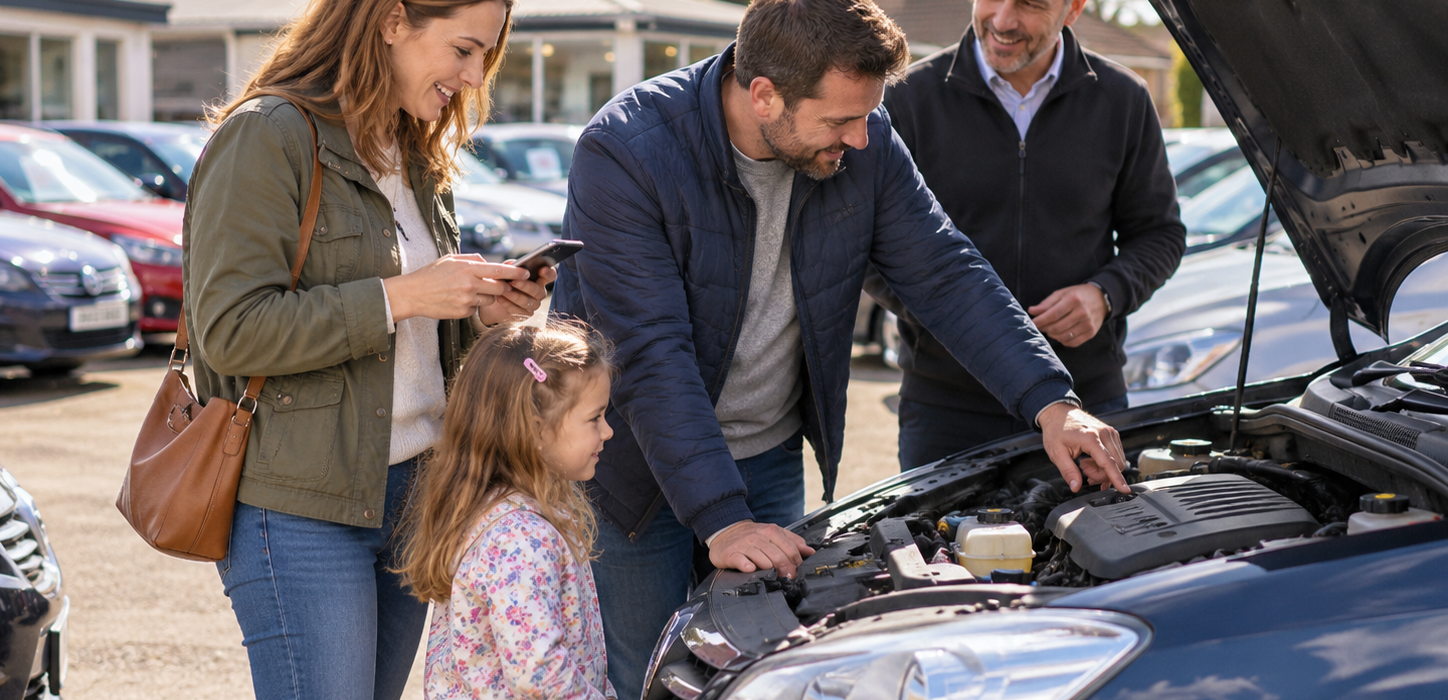
Look at tyres for uneven wear and check under the bonnet for leaks. Try every switch and button inside. Lights, wipers, windows and heaters all fail on older cars, so test each one. Smell for damp and check the boot floor for water.
Ask the seller’s permission for a test drive and confirm you’re covered to drive it. Start from cold if you can. Listen for knocks over rough surfaces and feel for pulling under braking on a quiet straight where it’s safe and legal to do so.
If you like the car but you’re unsure about mechanics, consider an independent pre-purchase inspection. Ask what it covers and arrange it before committing. An inspection can help you understand the car’s condition, although it cannot guarantee there will be no future faults.
Walk away if the seller rushes you.
Get the paperwork right and agree the price
Check who is selling the car and their right to sell it. For a private sale, compare the seller’s details with the V5C and ask for an explanation of any mismatch. The V5C records the registered keeper, not proof of ownership. A dealer may not be named on it, so check the VIN against the document and make sure the business details appear on your invoice.
Ask for service history and past MOT certificates. Gaps don’t always mean a bad car, but they do mean you should price in extra risk. Check the numbers match the documents in front of you.
Use what you found to negotiate. MOT advisories and body flaws are specific points you can raise with the seller. Check Parkers and Auto Trader valuations to see if the asking price is fair, then agree a final figure and get a written receipt with the car details and seller details. Make sure the receipt shows the date and price. Both of you should sign it.
There’s plenty of choice in Essex if you stay patient. Budget for the full cost and don’t hand over money until you’re satisfied with the paperwork and test drive.


